
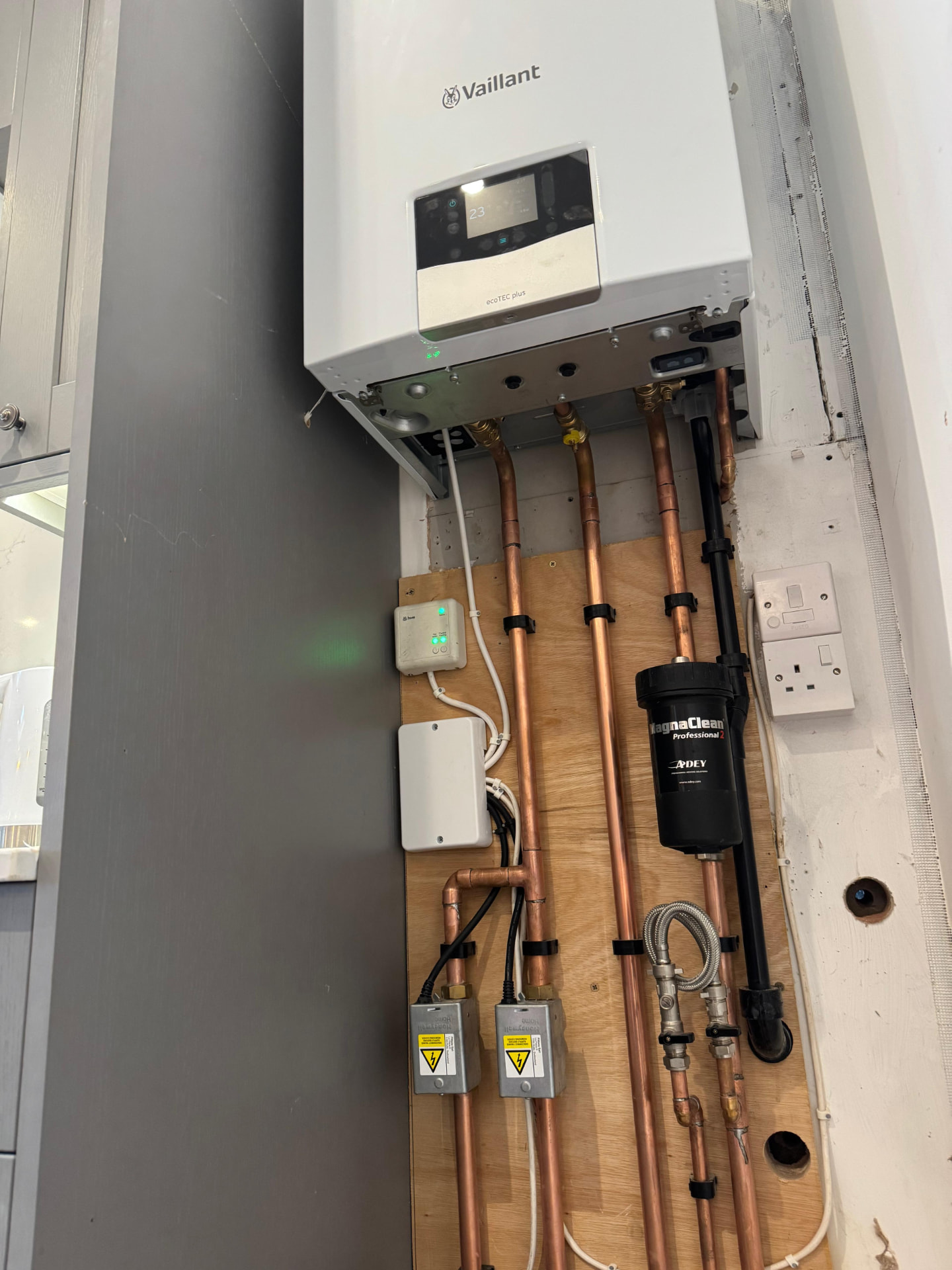
Sludge, corrosion residue and other debris can build up inside a central heating system over time. When circulation is restricted, radiators may heat unevenly and the boiler or pump can work harder than expected.
Power flushing is one possible way to clean a suitable system, but similar symptoms can have other causes. TREPP & CO checks whether a flush is the right answer before recommending the work.
Seven signs worth investigating
One symptom alone does not prove that a system needs power flushing. A combination of recurring circulation problems, dirty system water and uneven heat makes an assessment more worthwhile.
- Radiators are cold at the bottom even when the top becomes warm.
- Some radiators heat properly while others stay cool or take much longer.
- The heating system takes noticeably longer than usual to warm the home.
- Water released while bleeding a radiator appears dark or dirty.
- The boiler or circulation pump makes unusual noises while the heating runs.
- Radiators need frequent bleeding because circulation problems keep returning.
- Heating performance remains poor after straightforward control and radiator checks.
Why radiators become cold at the bottom
Debris tends to settle in lower parts of a radiator and can restrict the path of heated water. That can leave a cool band across the bottom while the upper section warms. Air more commonly causes cold areas near the top, so the position of the cold area is useful information rather than a diagnosis by itself.
A single cool radiator may instead need its valves checking or the system balancing. Several affected radiators can point towards a wider circulation issue.
Why an assessment should come first
Power flushing is not the automatic answer to every cold radiator or noisy boiler. Closed valves, trapped air, pump issues, controls and system design can produce overlapping symptoms. Checking the system first avoids recommending cleaning where a different repair is needed.
The condition and age of the pipework also matter. An engineer can inspect the heating system, discuss the findings and explain whether flushing, balancing or another repair is the sensible next step.
What to do next
Record which radiators are affected, where they feel cold and whether the problem changes when other radiators are turned down. Avoid repeatedly draining or adding chemicals without understanding the system condition.
TREPP & CO provides central-heating assessment and power flushing across North London. Contact the team for practical advice and a clear recommendation based on the system in your property.
Related TREPP & CO services