
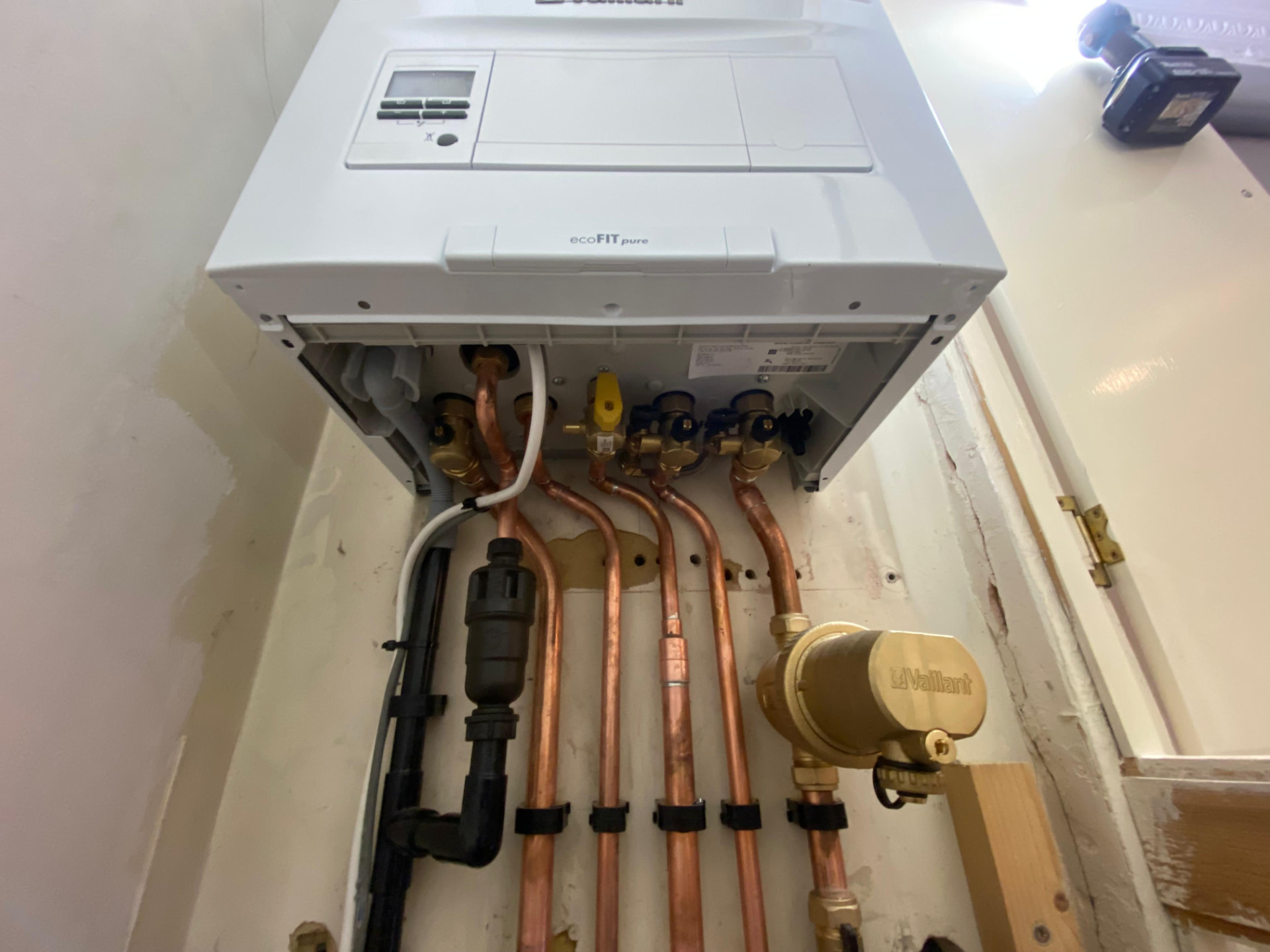
Water around a boiler should never be dismissed. Even a slow drip can damage nearby finishes or electrical parts, while a larger leak can quickly reduce system pressure and stop the heating or hot water.
The source cannot be confirmed from a photograph or puddle alone. Water may be escaping from visible pipework, a connection beneath the boiler or an internal component before tracking to a different point. The priority is to make the area safe and arrange the right inspection.
What to do first if your boiler is leaking
Keep people away from the wet area and avoid touching the boiler if water is close to electrical controls, sockets or wiring. If it is safe and you know how, turn the heating off using its normal controls. Do not remove the casing to look for the source.
A container or towel can help limit surface damage from a small accessible drip, but it is only a temporary measure. Do not tighten boiler fittings or operate unfamiliar valves, because that can worsen the leak or affect a safety component.
- Note whether the water appears only while the heating or hot water is running.
- Check the pressure gauge without touching or opening the appliance.
- Look for a fault code and record it for the engineer.
- Call urgently if water is spreading, nearing electrics or cannot be contained safely.
Where boiler leaks can come from
Visible leaks can come from pipe joints, valves or connections beneath the appliance. Internal causes can include seals, heat-exchanger components, the expansion vessel or the pressure-relief system. Condensate pipework can also leak if a joint has failed or a blockage is present.
The position of a drip is useful information, but water can travel across pipework and casing before it becomes visible. A proper diagnosis requires the system to be inspected and tested rather than a part being selected from the symptom alone.
Why pressure may fall at the same time
A sealed central-heating system can lose pressure as water escapes. The boiler may then lock out or display a low-pressure warning. Repressurising repeatedly does not repair the leak and keeps adding fresh water to the system.
If the gauge rises sharply when the heating runs and then drops again when it cools, tell the engineer. That pattern can help with fault-finding, but it is not a safe basis for a do-it-yourself repair.
When to call a heating engineer
Arrange an assessment whenever water is coming from the boiler, the pressure keeps falling or a fault returns after a reset. Significant leaking, loss of heating in cold weather or water near electrics should be treated as urgent.
TREPP & CO provides boiler fault-finding and 24/7 emergency plumbing and heating call-outs across North London. Gas boiler work should be completed by a Gas Safe registered engineer; TREPP & CO is registered under number 640420.
Related TREPP & CO services