
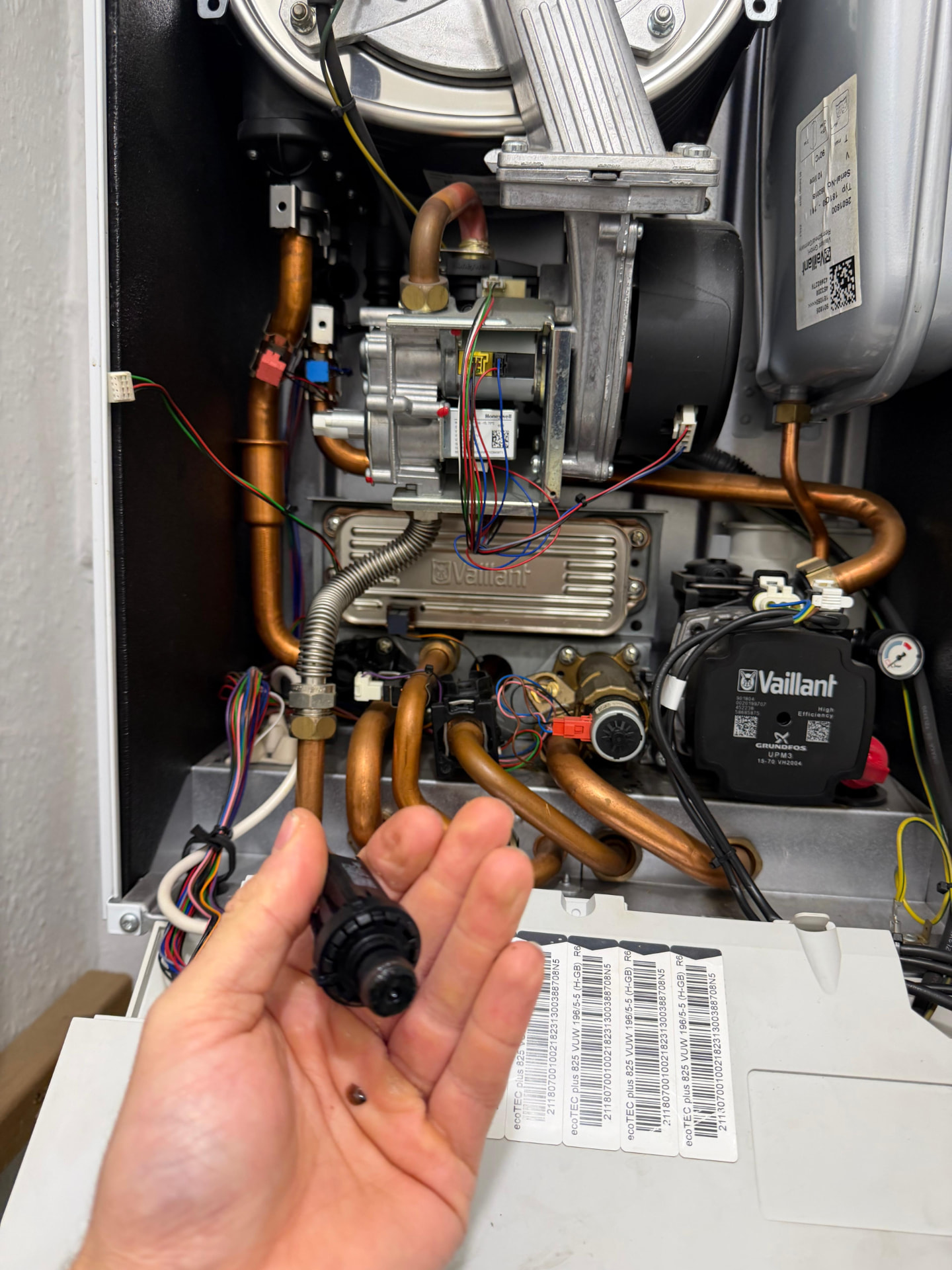
A boiler may need occasional attention to its pressure, but a gauge that repeatedly drops is usually telling you that something within the heating system needs investigating. Repressurising can restore operation for a short time, but it does not resolve the reason the pressure was lost.
The causes range from a small water leak to a component fault inside the boiler. This guide explains the common possibilities and the safe observations you can make before arranging an assessment.
What boiler pressure means
A sealed heating system needs enough pressure to circulate heated water around the boiler, pipes and radiators. The gauge on the boiler shows that system pressure. The correct range varies by manufacturer and model, so your boiler manual is the right place to check the recommended reading.
It is normal for the reading to move somewhat as the system heats and cools. A sustained fall, a sudden drop or frequent need to use the filling loop is different and should not be ignored.
Common reasons pressure keeps dropping
There is no single cause that can be confirmed without checking the system. However, repeated pressure loss can be associated with water escaping from a radiator valve, pipe joint or another part of the heating circuit. A leak can be very small and may not immediately leave an obvious puddle.
Pressure can also fall after radiators have been bled because air and a small amount of water have been released. If the pressure continues to drop after it has been restored correctly, further investigation is sensible.
A fault within the boiler, including a problem with a pressure-relief or expansion component, is another possibility. Boiler covers should not be removed by a homeowner, and a qualified engineer should assess internal components.
- Look for damp marks or drips around visible radiator valves and pipework.
- Note how quickly the pressure falls and whether it changes when the heating is on.
- Check the boiler display for an error code and refer to the manufacturer's manual.
- Avoid repeatedly repressurising the boiler without finding the underlying cause.
Could it be a hidden leak?
Not every heating-system leak is easy to see. Pipework may run beneath floors or behind finished surfaces, and a slow loss may evaporate before it forms a visible pool. Signs such as recurring pressure loss, staining, lifting flooring or unexplained dampness warrant investigation.
Professional leak detection is intended to narrow down the source before unnecessary disruption. The right approach depends on the system and what is found during the initial checks.
When to call a heating engineer
Arrange professional fault-finding if the pressure drops repeatedly, the boiler will not operate, water is escaping, or an error keeps returning. Turn the boiler off and seek urgent advice if you see significant leaking around the appliance or electrics.
Do not remove the boiler casing or attempt work on gas components. TREPP & CO is Gas Safe registered (No. 640420) and provides boiler repair and leak-detection services across North London, with 24/7 emergency call-outs where urgent help is needed.
Related TREPP & CO services