
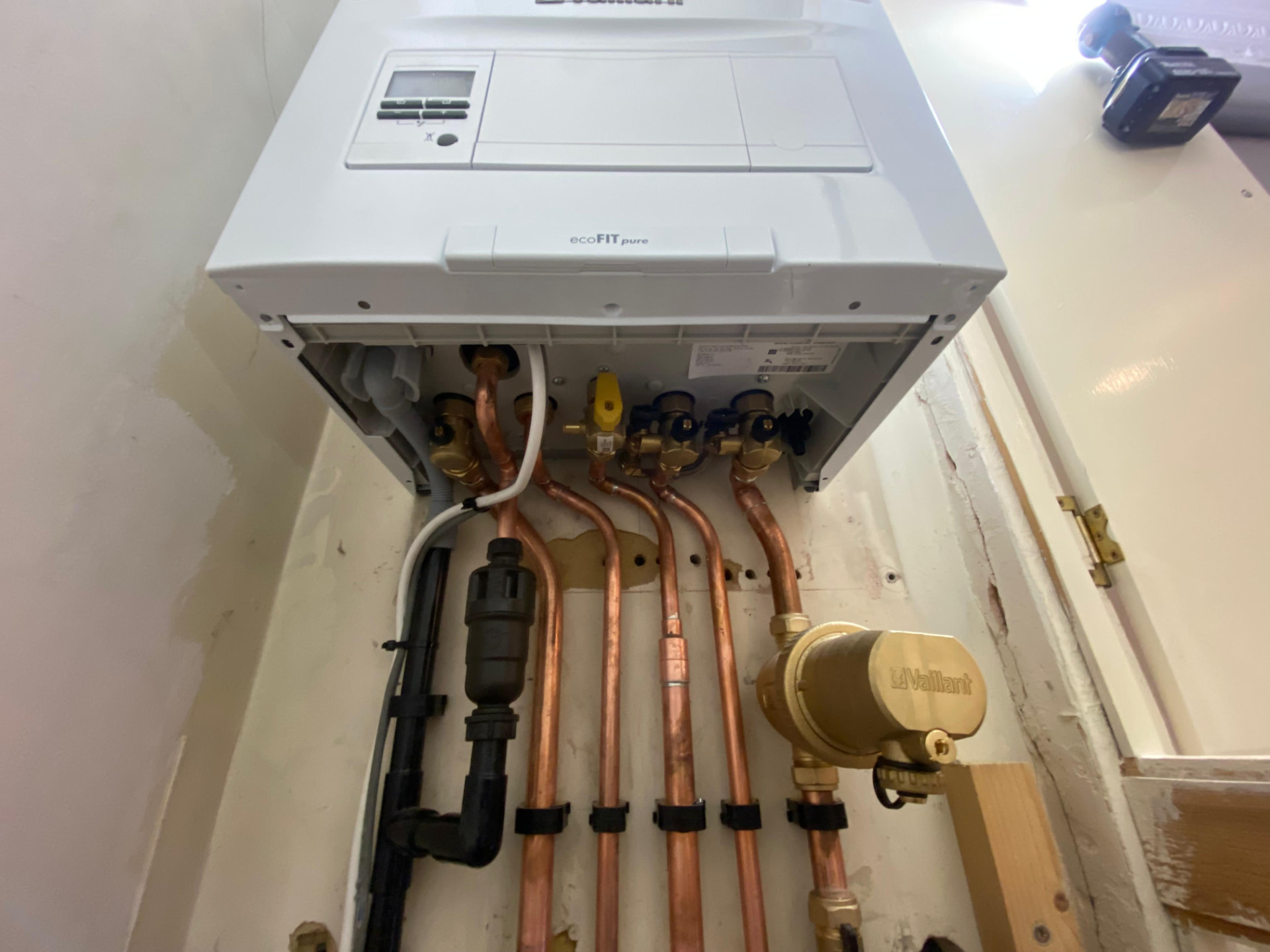
A leak beneath a floor may be obvious after water appears at the surface, but slower leaks can remain hidden while affecting flooring, ceilings below or the pressure in a heating system. Finding the source early can help limit unnecessary damage.
Not every damp patch comes from a plumbing pipe. Waste connections, heating circuits, building defects and water travelling from another area can create similar signs, so tracing should come before disruptive opening work.
Common signs of a leak beneath the floor
Changes in flooring, unexplained dampness and recurring system pressure loss can all justify further investigation. The pattern matters: a mark that grows after using a bath may suggest something different from pressure that falls whenever the heating runs.
- Flooring that lifts, warps, stains or feels persistently damp.
- A damp patch or discolouration on the ceiling below.
- A musty smell that returns after the area has been ventilated.
- Boiler pressure that repeatedly falls without a visible leak.
- An unexpectedly warm area of floor above heating pipework.
- The sound of water when no taps or appliances are in use.
Safe checks you can make
Stop using the nearest fixture briefly and see whether the symptom changes. Check accessible appliance connections, radiator valves and exposed pipework for moisture. If you can safely read the water meter, movement while all known outlets are off can be useful information, although it does not identify the leak’s position.
Photograph the affected area and mark the edge of a stain so you can see whether it spreads. Avoid lifting finished floors at random; water can travel along joists, screed or pipe routes and appear away from the actual failure.
What to do when water is actively spreading
If water is escaping quickly, use the internal stopcock if you know where it is and can reach it safely. Keep clear of affected electrics and call for urgent help. For a suspected heating-circuit leak, turn the heating off using its normal controls rather than opening the boiler.
Do not enter a ceiling area that is bulging or saturated. Keep people away from the space below and explain the extent of the damage when requesting assistance.
How professional leak detection helps
A methodical investigation starts by identifying which system is losing water and narrowing the likely route. Pressure testing and isolation checks may be used before a specific section of floor or wall is opened. The suitable approach depends on the pipework, finishes and symptoms found on site.
TREPP & CO traces and repairs hidden plumbing and heating leaks across North London. The team also provides 24/7 emergency call-outs when an active leak needs urgent attention.
Related TREPP & CO services